
Thinking about trying comedy at Skyros? Discover how comedy writing and improvisation can lift pressure, sharpen your writing and help people connect.
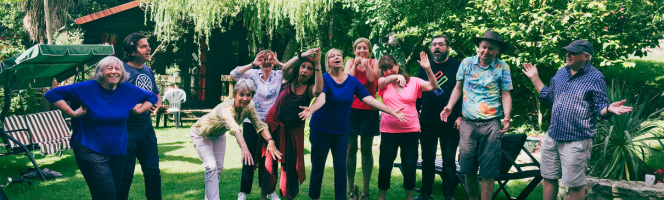
Comedy can sound like it belongs to other people.
The quick ones. The confident ones. The people who always seem to know what to say.
But that is not really what comedy is, and it is not why it works so well at Skyros.
At its best, comedy is about noticing. It’s about spotting what is odd, awkward or recognisable in everyday life, and finding a way to shape it. That is why it is worth trying, even if you do not think of yourself as funny, and even if the idea of performing makes you want to disappear into the sea.
Skyros has made space for comedy for years. It is not treated as a novelty or a side attraction. It is part of the wider creative life of the holiday. In 2026, that continues in different ways: Adventures in Comedy Writing with Logan Murray at the Skyros Centre, comedy-led courses at Atsitsa Bay, and Live, Write, Laugh with Kate Smurthwaite at The Grange.
So if you have ever been curious about comedy, but not quite sure whether it is for you, Skyros is a very good place to test that out.
It is not about being the funniest person in the room
This is often where people start to think it is not for them.
They imagine stand-up, spotlights and the pressure to be hilarious on demand. They assume comedy belongs to loud, quick, fearless people.
But comedy writing and improvisation are often quieter than that. They rely on observation, timing, surprise and perspective. They ask you to look at things slightly differently.
That’s why comedy can suit people who would never describe themselves as performers. You don’t need a one-liner in your pocket. You don’t need to arrive ready to dazzle anyone. You just need to be willing to notice more.
In fact, that is often where the best comedy starts.

It can be good for your mind
Laughter can release tension, lift the mood and help people feel more connected. It can interrupt the heaviness of your own thinking for a while. It can make something difficult feel more manageable, not because it erases the problem, but because it gives you another way into it.
Most people know that instinctively. A good laugh can change the atmosphere in a room in seconds.
Comedy can do something similar in creative work. It lowers the pressure. It makes things feel less stiff, less precious and less overworked.
It can loosen up your writing
One of the biggest gifts comedy gives people is freedom.
Serious writing can make people tense. They start polishing too early. They worry about whether it is good, clever or finished before the idea has had a chance to breathe.
Comedy is often better at cutting through that.
It gives you permission to exaggerate, follow strange thoughts, push an idea further than you normally would, and notice where the energy really is. Even if you never write comic material again, it can sharpen your timing, improve your ear, and help you find more life on the page.
That is one reason comedy sits so well beside other creative work at Skyros.
It helps people connect quickly
Comedy is social.
Even when you are writing alone, it usually works because it touches something other people know too: a shared irritation, an awkward truth, a familiar failure, a ridiculous moment that becomes funny because other people recognise it.
That is part of why comedy works so well on a Skyros holiday. The atmosphere already helps. People are there to join in, learn something, and enjoy themselves. You are not walking into a cold room where you have to prove your worth. You are trying something in a setting that gives you more room.And that changes everything.

Why it works at Skyros, Atsitsa and The Grange
Some things are easier to try when you are away from home.
Comedy is one of them.
At home, it is easy to talk yourself out of it. You are busy. You are tired. You are not sure it is your thing. At Skyros, the context changes. You have time. You are in good company. You are somewhere that expects people to try things.
The Skyros Centre gives comedy a smaller, more focused masterclass setting. Atsitsa Bay places it inside a broader, more playful holiday atmosphere. The Grange offers a shorter way in, closer to home, where guests can try comedy in a warm, informal weekend setting.
Different formats, same invitation: have a go.
So why is comedy worth trying?
Because making someone laugh is no small thing.
It can lift the mood in a room, break tension, help people feel less alone, and turn something awkward into something shared. People may not remember the exact line, but they often remember how laughter made them feel.
That is what makes comedy such a gift. It is not only about being clever or entertaining. It is about connection. About bringing lightness, warmth and recognition to something another person understands too.
And that is worth trying.
You don’t need to be the funniest person in the room.
You just need to be willing to have a go.
👉 Explore comedy at Skyros and see upcoming dates

Frequently Asked Questions
Do you have to be funny to try comedy writing?
No. Comedy writing often starts with observation rather than performance. You don’t need to arrive witty or confident. It begins with noticing what’s odd, awkward or true, and seeing what happens when you shape it.
Is comedy writing good for beginners?
Yes. Comedy writing can suit beginners very well because it gives you simple ways into creativity: noticing everyday irritations, exaggerating what is familiar, and finding the angle in something ordinary.
What happens in a comedy writing class?
A comedy writing class usually includes prompts, discussion, exercises, examples, and time to try things out. The aim is often to help people loosen up, notice more, and develop timing, surprise and perspective.
Is improv good for shy people?
It can be. Improv is often less about being loud and more about listening, responding and joining in. In the right setting, it can help people feel more at ease and less self-conscious.
Can comedy help with confidence?
Often, yes. Comedy can help people feel more flexible, less perfectionist and more willing to try things. It can also make creative work feel lighter and less pressured.
Why is laughter good for wellbeing?
Laughter is often linked with lower stress, improved mood and stronger social connection. It can interrupt heavy thinking for a while and help people feel more relaxed and more connected to others.
Can comedy help your writing?
Yes. Comedy can sharpen timing, improve observation, and make writing feel less stiff. Even if you never write comic material again, it can help you find more freedom and energy on the page.
What are the benefits of improv classes?
Improv classes can help with confidence, spontaneity, listening, connection and creative flexibility. They can also make people feel more playful and less trapped by getting things “right”.